
Households under strain are adapting by trading down and switching services, rather than slashing spending

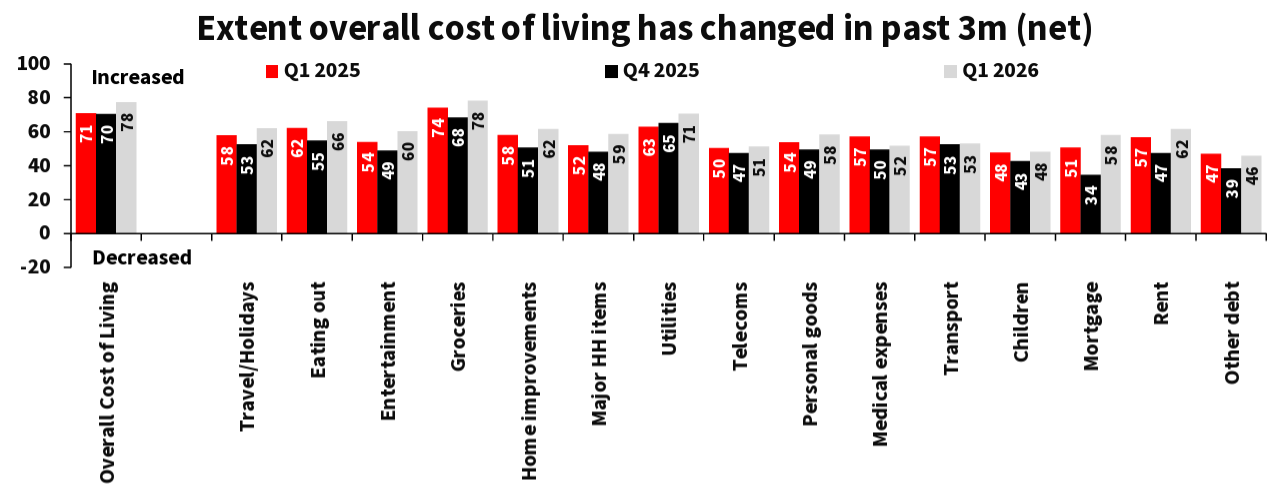
Australian households are experiencing their sharpest cost-of-living pressure in more than 10 years, yet many are responding by changing providers and cutting back selectively, according to the latest NAB Consumer Sentiment Survey.
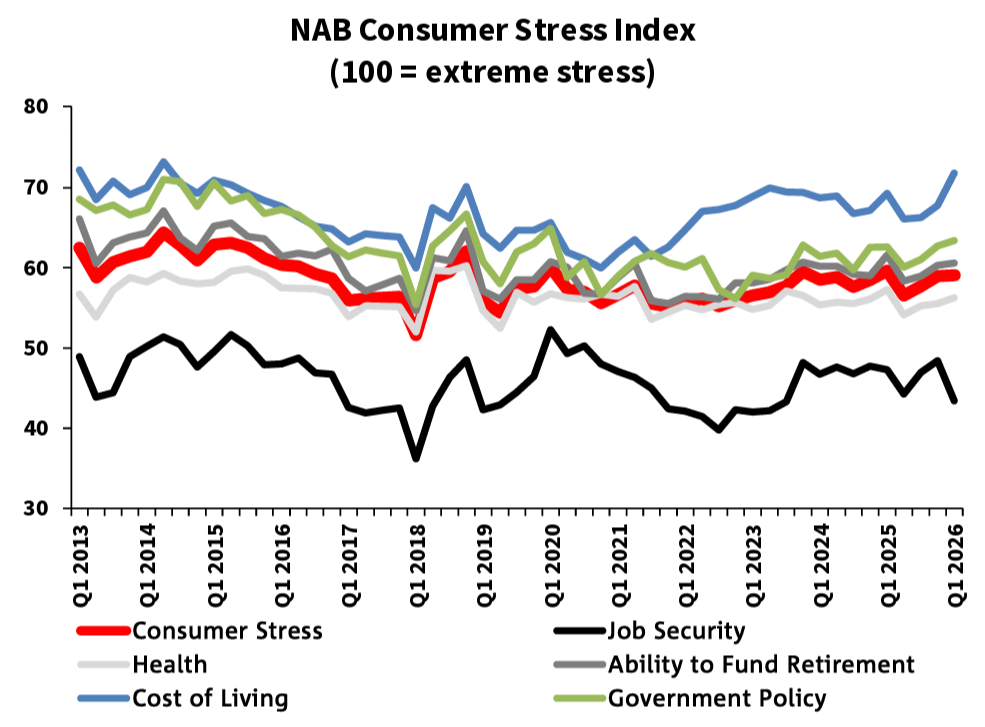
NAB’s Consumer Stress Index climbed to 59.1 in the March quarter, its highest reading since 2014 and above the long-run average. The bank attributed the increase to higher prices for essentials, including groceries, utilities, rent and mortgages.
 Source: National Australia Bank
NAB said the findings point to consumers adjusting behaviour rather than withdrawing from spending altogether, a pattern mortgage professionals may note as borrowers seek savings elsewhere while keeping up with housing-related costs.
 “Households are clearly under strain, but what’s striking is how proactive people are being,” said Dean Pearson (pictured right), head of behavioural and industry economics at NAB. “Rather than simply switching spending off, consumers are shopping around, switching providers and making very deliberate decisions to stretch household budgets.”
More than half of Australians — 57% — reported switching at least one provider in the past year in response to price rises, NAB found. Supermarkets were the most commonly changed category, highlighting groceries as a central source of pressure. Elevated switching was also recorded across insurance, internet and mobile services, streaming subscriptions and energy retailers.
 Source: National Australia Bank
Looking ahead, NAB reported weaker intentions for discretionary outlays, with reduced appetite for major household purchases, home renovations and holidays.
“Latest intentions suggest that consumers are planning to shift from selective cutbacks in discretionary spending to broad based restraint that now includes essential items, signalling rising financial stress and reduced spending capacity,” Pearson said.
NAB noted the survey was conducted before the outbreak of war in the Middle East and said the next quarterly result would indicate whether a global energy shock feeds further into household stress.
“Consumers are coping, but only by making increasingly tough and deliberate trade-offs,” Pearson said. “It will be interesting to see how they respond to the new challenges being thrown at them.
“What we do know is that Australians are making pragmatic choices, optimising their budgets, and preparing for what lies ahead.”
Want to be regularly updated with mortgage news and features? Get exclusive interviews, breaking news, and industry events in your inbox – subscribe to our FREE daily newsletter. You can also follow us on Facebook, X (formerly Twitter), and LinkedIn.


