New data show spending shifts towards non-discretionary items

Australian consumer spending increased by 2.1% in March, largely because motorists spent more at the bowser as fuel prices rose, according to NAB’s latest Consumer Spend Trend report.
Once fuel is removed, spending still rose 0.7% over the month. The bank attributed that underlying increase to higher outlays on food, alongside rising costs linked to construction and services.
NAB reported fuel spending was 25.7% higher than a year earlier. In March, fuel price growth exceeded growth in spend per transaction, which the bank said was consistent with consumers buying cautiously and making smaller top-up purchases as prices climbed.
Card spending figures published earlier this month by Commonwealth Bank also suggest Australian households are shifting their spending priorities as higher fuel costs — linked to the escalating conflict in the Middle East — push petrol prices to their highest levels in years.
 “For now, consumers have absorbed higher fuel expenses with only a small impact on their broader spending,” said NAB chief economist Sally Auld (pictured right). “However, there is clear underperformance among discretionary categories, particularly hospitality, travel and personal services.”
The report suggested discretionary goods remained comparatively steady, but discretionary services weakened in March. Spending shifted further towards non-discretionary items, led by fuel, while categories including cafes and restaurants, hotels and travel declined.
“We expect renewed cost-of-living pressures to continue to place ongoing pressure on household budgets and weigh on discretionary purchases,” Auld said.
Spending increased across every state and territory in March. South Australia and Queensland recorded the strongest monthly gains.
Spending by mortgage status (year on year, %)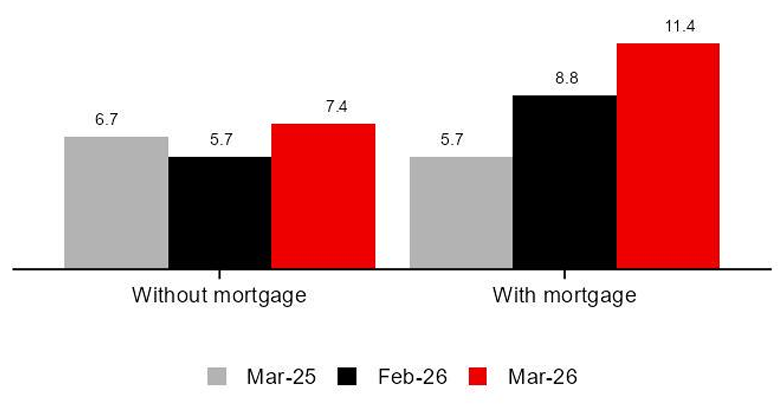 Source: NAB
Spending growth among mortgage holders over the past 12 months was about double the pace recorded over the same period a year earlier. With the exception of utilities and telecoms, where growth was broadly similar, mortgage holders posted stronger increases than households without a mortgage across every other spending category.
Given mortgage holders also spend more on average on fuel and construction-related items, NAB’s figures suggest the recent fuel price shock may fall more heavily on this group.
Want to be regularly updated with mortgage news and features? Get exclusive interviews, breaking news, and industry events in your inbox – subscribe to our FREE daily newsletter. You can also follow us on Facebook, X (formerly Twitter), and LinkedIn.