More Aussie homeowners seek space and rental income without upsizing

Australians are increasingly using renovation finance to change how their homes function, with a growing share of borrowers funding secondary dwellings rather than cosmetic upgrades.
National Australia Bank (NAB) data shows renovation loans rose 21% in 2025, outpacing growth recorded in the previous two years. The bank said a common use of that lending is the construction of granny flats, as households seek additional living space, potential rental income and a way to extract value from existing land holdings.
Interest in the concept is also rising online. Searches for “granny flat” have increased on property platforms, particularly in Sydney and Perth, amid ongoing affordability pressures and strong rental demand.
The Housing Industry Association expects granny flat construction to increase sharply, forecasting a tenfold lift by 2026 compared with four years earlier.
 NAB executive Denton Pugh (pictured right) said the trend reflected a shift in attitudes to homeownership. “People want their homes to work harder for them,” he said. “With affordability still tough and rental demand rising, adding a secondary dwelling is becoming a smart, practical option. It gives homeowners extra space without stretching into a much bigger mortgage or taking on the cost of moving.
“A well designed granny flat is more than just four walls. We’re seeing families use them to stay closer together, whether that’s giving ageing parents a safe, comfortable place to live nearby, or helping adult children stay at home longer as they look to enter the property market.
“Granny flats can give people the room they need as life changes, or generate steady rental income. More and more, they’re becoming a long-term investment that strengthens the value of the property.”
NAB customer Haydan Andrews said his decision to build a granny flat on his Newcastle property came after reviewing the costs of a larger redevelopment.
“When I first bought the place, I actually thought I’d knock down the existing house and do a full redevelopment,” Andrews related. “But once I started getting quotes, it was clear it would blow the budget massively.
“Switching to a granny flat just made more sense. The numbers stacked up straight away - lower build cost, quicker turnaround, and rental demand in Newcastle is strong. It meant I could still grow the property without giving myself more of a financial headache.”
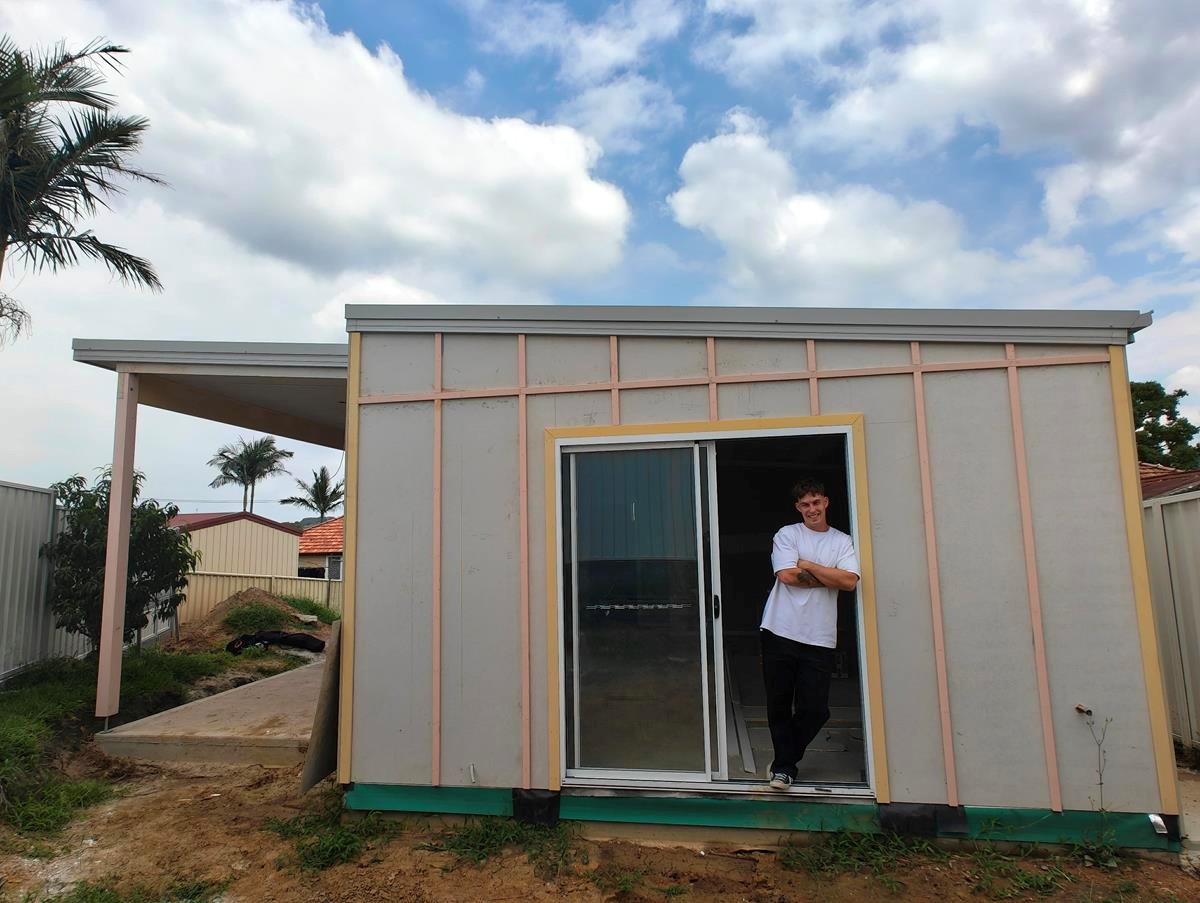 NAB customer Haydan Andrews at his granny flat
After living in the front house for a year, Andrews used that time to plan the build and consider tenant needs. “The side access, the size, it all worked,” he said. “I didn’t want to rush it. I wanted to build something that adds value long term. Designing it with future tenants in mind was also important. I didn’t want tenants feeling like they were stuck in someone’s backyard with zero privacy. So I designed it to feel like its own little place.”
Andrews added that the project was intended to create flexibility over time. “I underwent this process to set myself up,” he said. “Whether I keep the place or sell it later, the granny flat gives me options, and that’s the whole point.”
Want to be regularly updated with mortgage news and features? Get exclusive interviews, breaking news, and industry events in your inbox – subscribe to our FREE daily newsletter. You can also follow us on Facebook, X (formerly Twitter), and LinkedIn.