Applications fell again in the March quarter, while arrears dropped to historic lows across several sectors

Small businesses have pulled back from borrowing, with loan applications falling sharply in the March quarter as inflation, higher interest rates and recession concerns continue to shape sentiment.
According to Banjo Loans’ latest Barometer report, said applications were down 28% over the quarter and 22% compared with a year earlier. The value of loan applications also dropped, falling 34% in the quarter and 13% year on year.
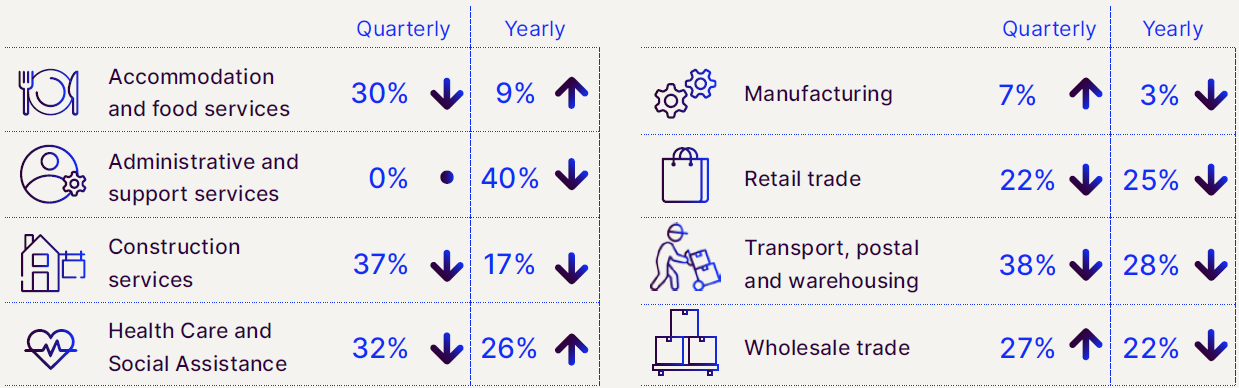
The retreat was broad-based across industries. Even so, a handful of sectors recorded quarterly increases in application volumes, including manufacturing (up 7%), wholesale trade (up 27%) and arts and recreation services (up 5%).
In contrast, construction, retail, accommodation and food services, and transport, postal and warehousing were among the sectors showing notable declines in applications during the period.
 Source: Banjo Loans
Regional results were mixed. New South Wales recorded a steep fall in activity, with applications down 44% and the value of loans drawn down 46% after a stronger previous quarter. Victoria’s applications fell 25%, continuing an uneven pattern across the financial year.
Queensland saw applications dip 5%, but the value of loans drawn rose 59% to a multi-year high. Western Australia also posted a jump in value, up 65%, despite applications being 35% lower than a year earlier. South Australia, after an unusually strong prior quarter, saw applications fall 88% and return to levels similar to the same period last year.
The Banjo Loans report also pointed to a tightening focus on repayments. Arrears of 30 days or more fell 30% over the quarter, with several industries recording no loans in arrears, including accommodation and food services, administration and support services, retail trade, manufacturing, and professional, scientific and technical services. Transport, postal and warehousing cut its arrears by 62% in the March quarter after an earlier rise through the year. By contrast, arrears increased in construction and rose sharply in rental, hiring and real estate services.
On credit quality, the report noted a slightly higher share of loans declined in the March quarter than a year earlier, though the decline rate improved marginally compared with the previous quarter. Serviceability remained the leading reason for declined applications, followed by failure to meet minimum eligibility criteria. Adverse credit history, tax office debts and bank statement conduct were also cited as common factors.
“Resilience has been a key feature of Aussie SME operations in recent years,” the report said. “Indeed, it’s been the essential trait among those that have not just survived, but grown. That resilience will be tested to a new level as the consequences of the war in Iran whacks domestic (and global) confidence and price effects seep through the economy, businesses and households.
“Controlling what they can, SMEs have tidied up arrears – with our latest Banjo Barometer showing they have reached historical lows. As highlighted in our other key piece of research, the SME Compass Report, most Aussie business owners do have strategies in-place to deal with inflation and increased interest rates. How those strategies play out will be keenly watched as we strap ourselves in for what could be a bumpy second half of the year.”
Want to be regularly updated with mortgage news and features? Get exclusive interviews, breaking news, and industry events in your inbox – subscribe to our FREE daily newsletter. You can also follow us on Facebook, X (formerly Twitter), and LinkedIn.