Office address: 8 Chifley Square Sydney NSW 2000
Website: rba.gov.au
Year established: 1959
Company type: banking
Employees: 1,575+
Expertise: monetary policy, financial system stability, payments system management, economic research, interest rate setting, banking services, currency issuance, policy analysis
Parent company: The Australian Government
Key people: Michele Bullock (governor); Andrew Hauser (deputy governor); Susan Woods (COO); Michelle McPhee, Sarah Hunter, Christopher Kent, and Brad Jones (assistant governors)
Financing status: N/A
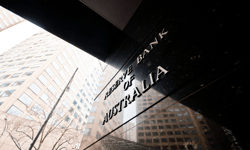
The Reserve Bank of Australia (RBA), based in Sydney, is the nation’s central bank with over 1,575 staff. The RBA manages monetary policy, sets the cash rate, and helps keep inflation steady while supporting financial stability and safe payments.
The Reserve Bank of Australia was founded in 1960 to take on central banking duties after separating from the Commonwealth Bank. This change followed decades of evolution, beginning with the Commonwealth Bank’s creation in 1911 and the gradual shift of note-issuing and policy roles.
Through the 1930s and World War II, the Bank gained more control over currency and banking policy, adapting to economic pressures. The 1980s and 1990s brought major reforms, including the float of the Australian dollar and a move to market-based monetary policy.
In 1998, banking supervision moved to a new authority, while the RBA became responsible for payments system safety. Since the 1990s, the RBA has focused on price stability and clear communication, with its mandate updated as recently as 2023.
The Reserve Bank of Australia’s services and tools affecting the mortgage sector include:
The RBA’s services underpin the way banks set mortgage rates and manage lending. Its decisions and data guide lenders, brokers, and borrowers across the Australian mortgage market.
To see the current rates offered by banks based on the RBA’s cash rate, visit MPA’s Australian mortgage rates guide.
The RBA’s culture is described as open and dynamic, with a strong focus on transparency and continuous improvement, while supporting staff through a range of benefits:
The Reserve Bank of Australia values a workplace that is open to new ideas and encourages teamwork across different areas. Staff are urged to focus on outcomes, learn from experience, and work together efficiently.
Michele Bullock became governor of the Reserve Bank of Australia in September 2023 and chairs the main boards and councils. Before this, Bullock was deputy governor and held senior roles in financial system, currency, and more. She is a member of Chief Executive Women and co-chairs a regional financial group.
The RBA’s leadership team brings a range of expertise and guides the bank’s core functions and strategy:
This leadership group ensures that the central bank meets its goals and supports Australia’s economy. Their combined expertise drives the RBA’s work in policy, operations, and financial stability.
The RBA has recently reported that more student housing is being built for international demand. The nation’s central bank found that these projects add hundreds of beds at once, which helps reduce rental pressure in city areas. Its research will help inform policy and public understanding of housing and the education sector.
The Reserve Bank of Australia is also focused on keeping inflation steady while supporting jobs and growth. With recent shifts in public sector demand, the RBA faces a more unpredictable path forward. The bank’s future actions will aim to balance inflation and employment as the economy changes.
A $150 billion data centre boom is brewing, and housebuilding targets could become a victim of progress

Latest ANZ-Roy Morgan data shows only a modest lift as economists warn further rate rises ahead

State treasurer blames Labor’s property tax overhaul on worsening state finances, but Federal coffers remain in good health

Westpac, NAB, CBA, ANZ and Macquarie all expect a hike before Christmas - here's why

Commonwealth Bank rebuked, younger borrowers hit hardest by rate rises: key takeaways from final hearing in Greens-initiated inquiry

Treasury says investor tax changes will barely dent prices, but economists, banks and the Coalition reckon the modelling underestimates the damage

Australia’s largest home lender says correction is worse than anticipated – and it's coming for previously bulletproof cities

Latest GDP data makes the case for another interest rate rise before the year’s end
House prices are falling in nearly every capital city, but a stalled approvals pipeline is presenting challenges

Latest APRA data shows an uneven pullback for the big five, with investor lending hit hardest