New modelling reveals the average losses incurred by Australians from unpaid super

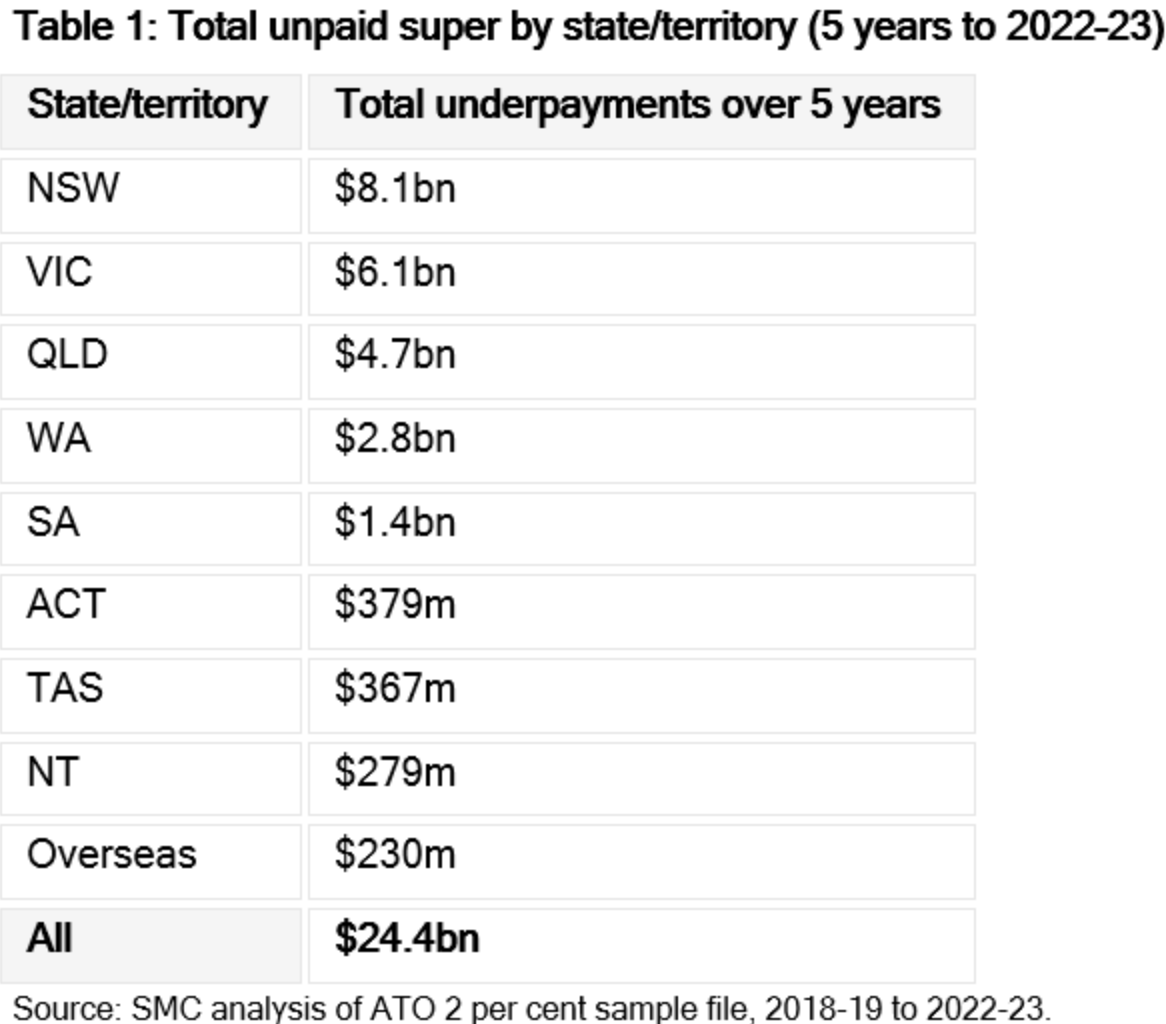
One in four Australians lost a total of $24.4 billion in unpaid super between 2018 and 2023, according to new data, which revealed that employees are losing thousands of dollars in unpaid super annually.
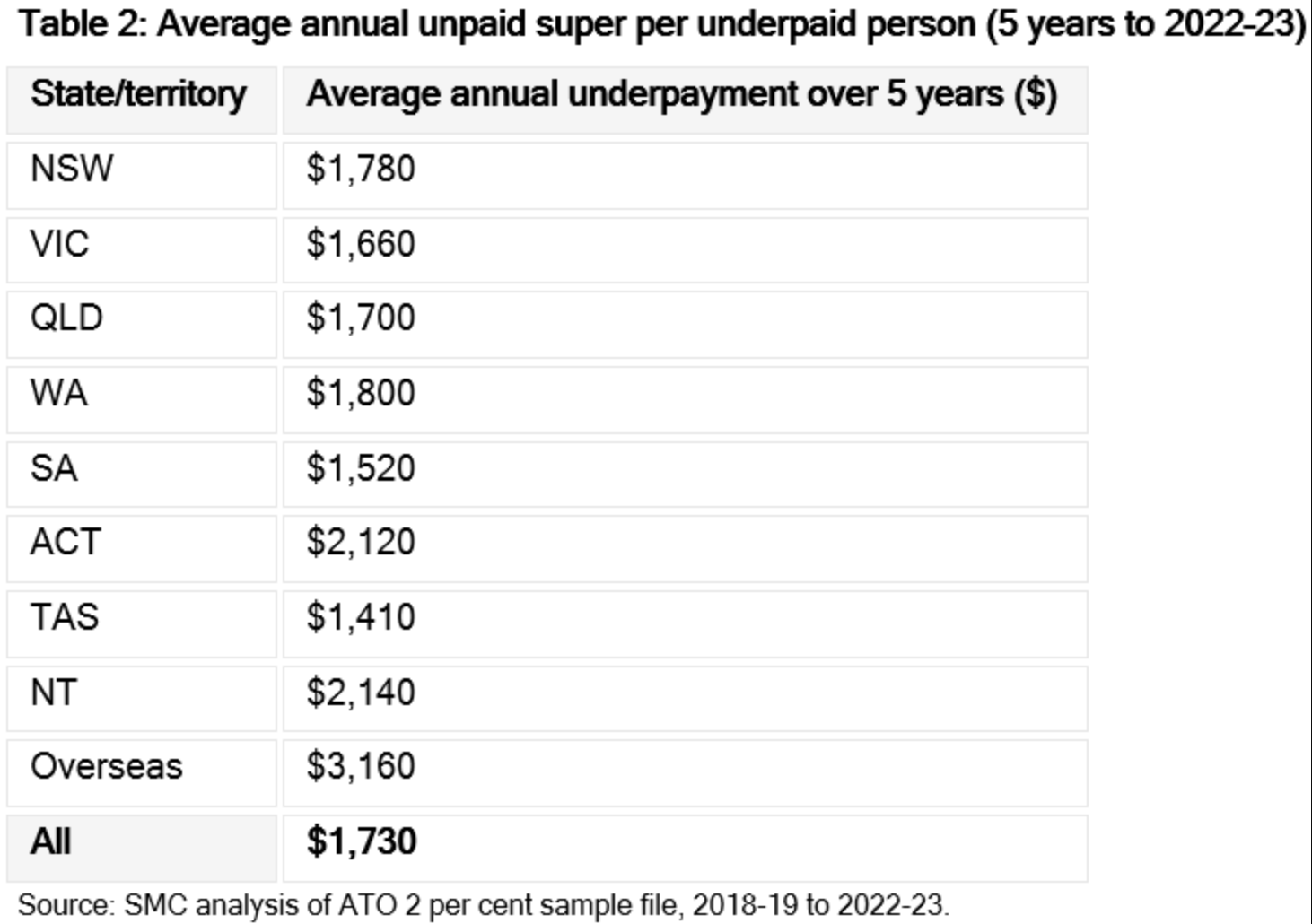
New modelling from the Super Members Council (SMC) revealed that Australian workers who were underpaid super missed out on an average of $1,730 per year over the five years to 2022‑23.
"Unpaid super is a silent pay cut that's cost Australian workers $24.4 billion in just the last five years alone," said Super Members Council CEO Misha Schubert.
"This is money Australians have earned but never been paid – and it's leaving millions significantly poorer at retirement."
Schubert said unpaid super hits vulnerable workers the hardest, including women, younger workers, and people on low incomes.
"For someone shortchanged just $1,730 in a year, the loss can snowball into more than $30,000 by retirement," Schubert added.
Unpaid super in Australia
Employees in the Northern Territory recorded the highest annual super underpayment in Australia with an average of $2,140 per underpaid worker, according to SMC modelling.
Employees overseas saw a bigger shortfall of $3,160 in unpaid super.
Over the five financial years from 2018 to 2023, New South Wales recorded the highest super underpayment amount, at $8.1 billion.
This was followed by Victoria ($6.1 billion) and then Queensland ($4.7 billion).
Payday Super reform
SMC's data comes ahead of the upcoming Payday Super implementation on July 1, where employers will be required to pay their employees' super at the same time as their wages.
"Payday super is a game‑changer because it will help to stop unpaid super before it happens," Schubert said.
"This long-overdue shift to pay super with wages will make any underpayments visible, easier to fix, and far harder to hide – while also levelling the playing field for employers who already do the right thing by their staff."
The Australian Taxation Office (ATO) has urged employers to start planning ahead of the major super reform, which is expected to eliminate the "unofficial cash buffers" for many small businesses.
"Review your payroll systems and super processes and get ready to pay super guarantee more frequently," said ATO assistant commissioner Angela Allen earlier this year.