Falling medians mask sharp regional rent rises and stock squeeze

Bay of Plenty has quietly taken the crown from Auckland as New Zealand’s most expensive region for renters, even as the national median rent edges lower.
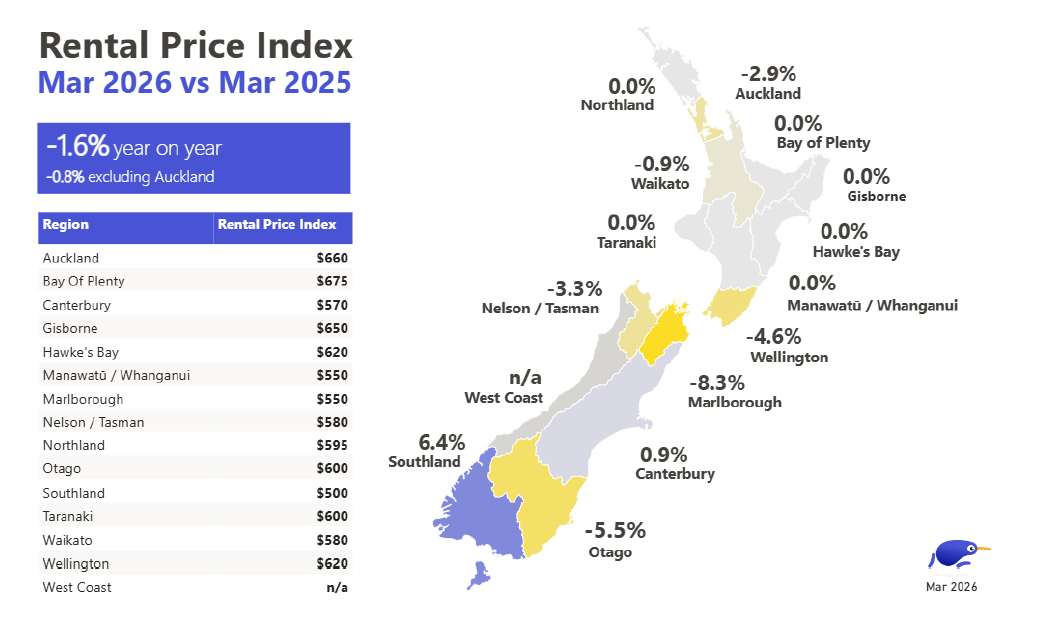
Trade Me Property’s latest Rental Price Index shows the national median weekly rent sat at $620 in March, unchanged on February but down from $630 a year earlier. It is the fifth consecutive month of annual declines, suggesting some relief for tenants despite ongoing cost‑of‑living pressure.
 That pattern is echoed in realestate.co.nz’s March figures, which show 6,629 rentals listed (down 3.2% year-on-year), total rental stock slipping 2.8% to 7,473, and average asking rents easing 2% to $632 a week.
Trade Me Property spokesperson Casey Wylde (pictured) said there is more going on beneath the surface than the headline fall implies.
“Normally, when demand for rentals goes up by 9% and the number of available properties falls by 5%, we’d expect rents to increase. However, other pressures are now impacting rentals,” she said.
Those pressures include higher fuel costs and broader economic uncertainty, which may be encouraging renters to stay put rather than upgrade.
On the supply side, a recent survey shows a record net 26% of residential investors planning to sell in the next 12 months, while only 12% are considering buying another property – a shift that could further constrain rental stock in some markets.
Bay of Plenty pulls ahead as Auckland cools
Regionally, Bay of Plenty’s median rent has risen to $675 a week, nudging ahead of Auckland on $660 for the second month in a row.
Wylde noted that “for years, Auckland was the most expensive place to rent, but the Bay of Plenty has been catching up,” with Tauranga’s median climbing to about $720 while some Auckland districts have fallen $30–$35 a week.
Mixed bag for regions and property types
The index highlights a patchy picture across the country. Marlborough, Otago, and Wellington have become more affordable, while Southland’s median rent has jumped 6.4% to $500 and Christchurch remains tight, with demand up 10% against supply growth of just 2.5%.
Property size also matters. Larger family homes, particularly those with five or more bedrooms, continue to attract fierce competition and rising rents, while apartments and townhouses have seen asking rents ease.
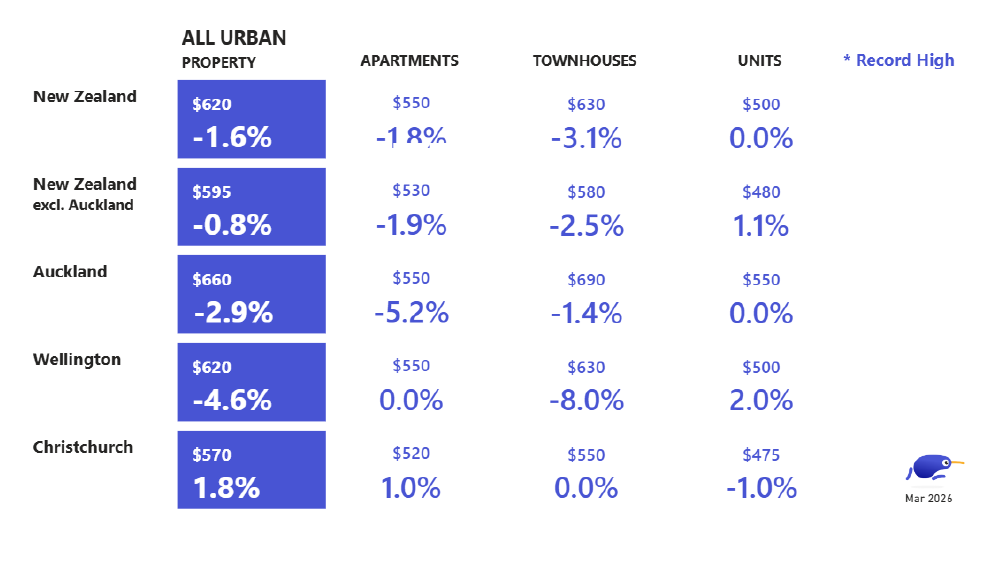 Wylde said, “landlords of smaller, inner-city properties seem to be realising they have to lower their prices to meet the market,” although she warned that fewer listings mean “the lower prices we’re seeing now could disappear quickly.”
Stay informed with the latest housing market trends and mortgage insights — subscribe to our free daily newsletter.