Westpac: Oil shock to push inflation higher, OCR on hold this year

Westpac has slashed its New Zealand growth outlook and lifted its inflation forecasts, warning that the Iran war and higher fuel costs will weigh on households, businesses, and the housing market through 2026.
Chief economist Kelly Eckhold (pictured) now expects GDP to grow just 1.9% in 2026, down from 2.8% previously, with a 0.4% contraction pencilled in for the June quarter as higher living costs and weaker consumer confidence bite.
Eckhold warns that “the Iran War will have damaged confidence in the household and business sectors and will be prompting changes in spending and investment plans given people have no real idea on when conditions will improve.”
On prices, Westpac has upgraded its inflation track, forecasting a peak of 4.1% in mid‑2026 and inflation staying above 3% until at least early 2027. The bank notes that crude oil and refined fuel prices are likely to remain elevated for much of this year, feeding through to petrol, transport, groceries, and construction costs.
Soft housing market as mortgage rates stay under pressure
The weaker growth outlook and higher‑for‑longer inflation are expected to keep mortgage rates elevated and cool housing activity. Westpac now sees national house prices falling around 1% over 2026, after already “muted” gains in recent months.
In the wake of the conflict, global bond yields have risen, putting renewed upward pressure on New Zealand mortgage rates just as households confront rising transport and grocery bills.
Westpac expects buyers to step back from the market, with a softer labour market also weighing on borrowing capacity and sentiment. Unemployment is forecast to edge up from 5.4% to about 5.6% by mid‑year before easing back only gradually.
OCR on hold in 2026, but hikes coming later
Despite the inflation spike, Westpac does not expect the Reserve Bank to respond with immediate monetary tightening.
“Even with a significant near‑term rise in inflation, we expect the RBNZ will remain on hold until the end of this year,” Eckhold said, arguing that higher interest rates cannot unwind an oil shock that has already occurred and would risk deepening the slowdown.
In a recent speech on the Iran conflict’s impact on New Zealand, RBNZ governor Breman struck a similar note, saying “we are likely to see higher headline inflation over the near term, and somewhat weaker growth momentum,” and stressing that “monetary policy can and should ensure that a temporary inflation spike does not turn into enduring inflationary pressures.” She said the committee will be vigilant to that risk.
However, Westpac still sees rate hikes ahead once the shock fades and economic slack is absorbed, with the OCR expected to rise from the December quarter.
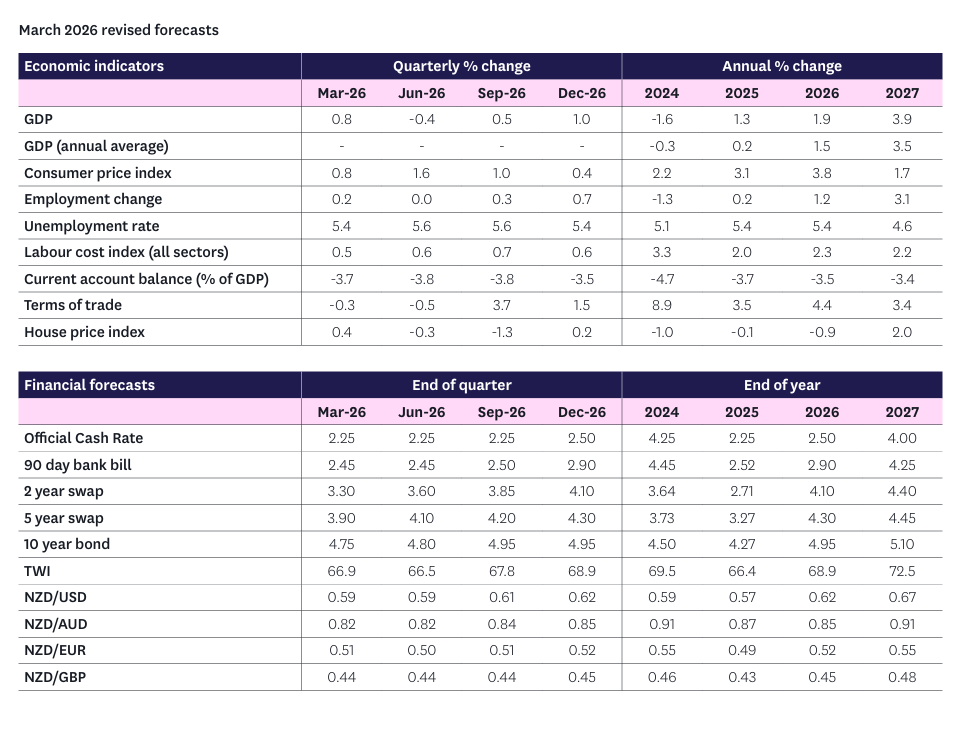 Read the full Westpac report for more insights.
Stay informed with the latest housing market trends and mortgage insights — subscribe to our free daily newsletter.