
Zillow data showed a split market where only standout listings moved at speed

Desirable listings in early 2026 are either gone in days or left to linger, underscoring how the US housing market has split between fast-track and slow-moving inventory.
A new Zillow analysis found that nationally, 18.5% of homes went under contract within seven days in February 2026. In March, the typical sold home went pending in 19 days, while the median active listing had already been on the market for 56 days.
That 37-day gap has been the widest divide between sold and active stock for any March since 2020. The split is far from uniform across markets.
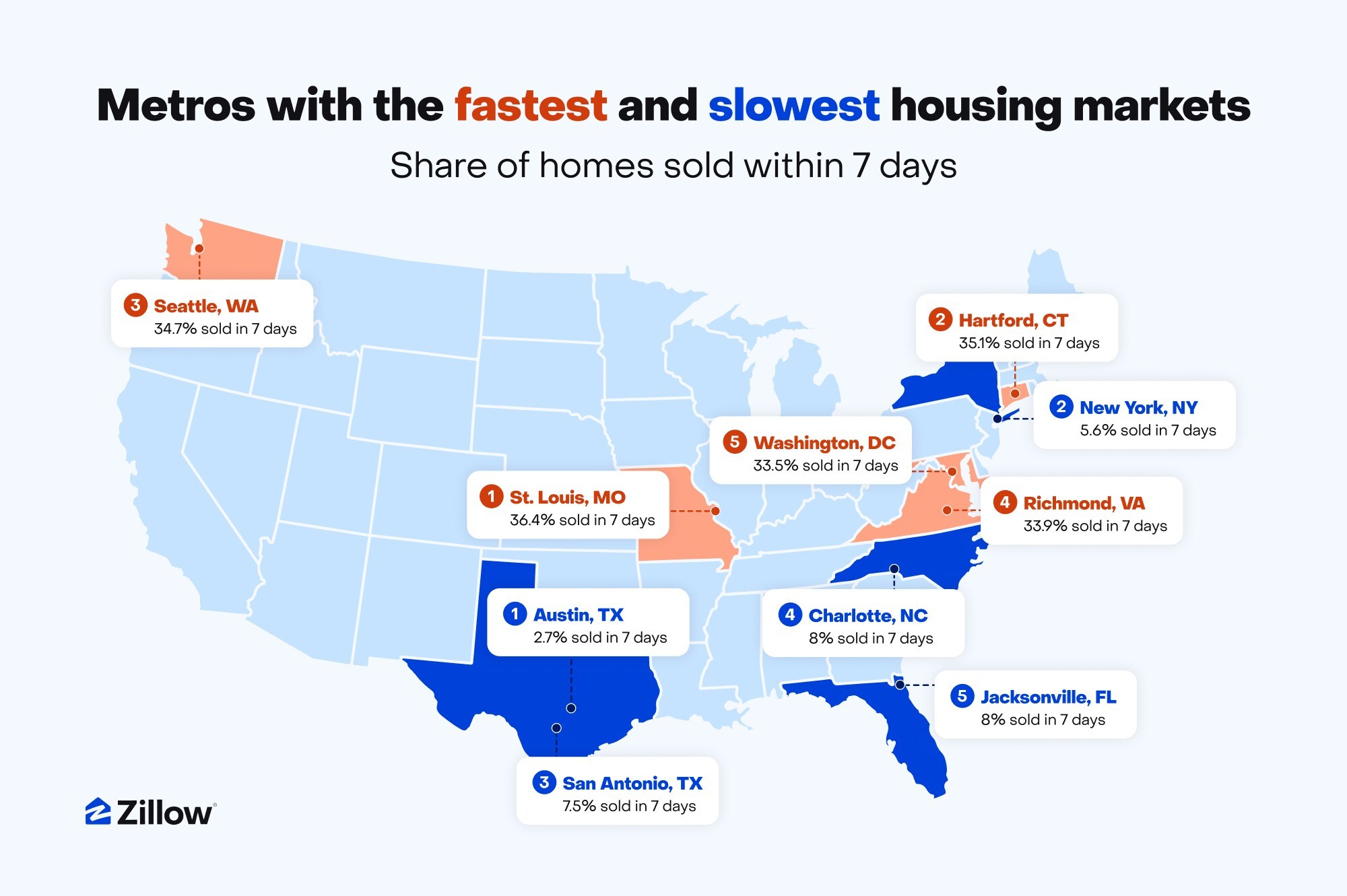
Midwest metros such as St. Louis, Cincinnati and Kansas City saw at least 3 in 10 homes sell within a week. In contrast, fewer than 1 in 10 homes moved that fast in Austin, San Antonio, Charlotte and Jacksonville.
Homes selling fast still commanded a premium. Zillow reported that 44.3% of properties that went pending within seven days sold above list in February.
By comparison, only 17.1% of all homes sold above asking. That made quick sales 2.6 times more likely to close over asking price – the second-highest multiple in the firm’s data back to 2018.
“The cream of the crop is still selling fast, even in markets that have slowed considerably,” Orphe Divounguy, senior economist at Zillow, said.
“However, higher costs are putting buyers under pressure, so they are more choosy than during the pandemic frenzy. Desirability is ultimately a function of price, and getting the pricing strategy right from day one can be the difference between a week on the market and months. Sellers who meet buyers' current expectations of price, versus higher price expectations during the pandemic, can still sell their home quickly.”
A slow-burning backdrop for existing-home sales
The National Association of Realtors reported that existing-home sales in February rose 1.7% month over month to an annual pace of about 4.09 million, but were still down from a year earlier, with NAR’s confidence index putting the median time on market at 47 days.
“Housing affordability is improving, and consumers are responding,” NAR chief economist Lawrence Yun said.
“Still, there is a long way to go to return to pre‑pandemic levels of transaction activity. There are more than 6 million more jobs than in 2019, yet home sales per year are down by one million.”
For brokers, pricing and product strategy matter more
Realtor.com’s economists already warned that higher mortgage rates are reshaping how quickly even attractive stock trades.
“Higher mortgage rates change the math for buyers and sellers alike,” Joel Berner, senior economist at Realtor.com, previously said about the shrinking premium on flipped homes.
“Flipped homes still draw attention and tend to move faster than other older homes, but sellers are increasingly having to recalibrate their expectations as higher mortgage rates constrain what buyers can afford.”
For mortgage professionals, the emerging “two-speed” market reinforces that borrowers are more sensitive to payment, and that brokers who could pair sharp pricing advice with flexible financing stand to gain.
“Lending options are going to be important this year,” Tom Davis, chief sales officer at Deephaven Mortgage, previously told Mortgage Professional America, adding that creative tools such as bridge loans are helping real estate agents sell their house, and also guide homeowners into their next purchase in a tougher environment.
Stay updated with the freshest mortgage news. Get exclusive interviews, breaking news, and industry events in your inbox, and always be the first to know by subscribing to our FREE daily newsletter.


