
Realtor.com data showed where seven‑figure lifestyles start below $1 million
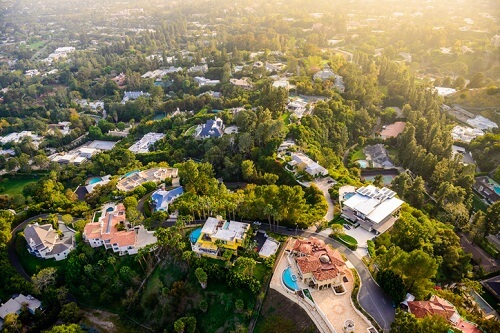
America’s luxury housing market reached an inflection point in February: prices at the top softened year-over-year even as a handful of supply‑rich metros offered what looked like “luxury for less” to buyers and their lenders.
Realtor.com’s latest Luxury Housing Report pegged the national entry‑level luxury threshold at $1,205,081. That's up 1% from January but 3.1% below a year earlier.
Instead of the usual bifurcation between trophy coasts and the rest of the country, the report highlighted a widening spread inside the luxury tier itself. In San Antonio–New Braunfels, Texas, buyers reached the top 10% of listings at $750,510. Meanwhile, in Heber, Utah, the threshold sat at $7.25 million – more than six times the national bar and over four times the local median.
“We are seeing a continued recalibration in the luxury sector as we move into the spring season,” Danielle Hale, chief economist at Realtor.com, said.
“While the national threshold remains below year‑ago levels, the monthly uptick across all luxury tiers from entry‑level to ultra luxury suggests that pricing is beginning to find a firmer footing. However, what luxury meant remains highly localized; in some metros, a buyer can reach the top tier for under $800,000, while in others, $3 million is barely the baseline.”
The report defined entry‑level luxury as the 90th percentile of list prices, high‑end at the 95th percentile and ultraluxury at the 99th percentile – a framework Realtor.com economists have used in earlier research to track how far the top of the market had drifted from local medians.
At the national level, the 90th‑percentile bar settled near three times the typical listing price, but in enclaves such as Bridgeport‑Stamford‑Danbury, Conn., and Naples‑Marco Island, Fla., luxury started at 5–5.5 times the median.
“Accessible luxury” clusters in the Sun Belt
Sun Belt metros dominated the “accessible luxury” list. San Antonio, Houston, Orlando, Charlotte, Jacksonville, Atlanta and Dallas–Fort Worth all posted thresholds under or just below $1 million. Ample land, newer stock and steady inventory helped keep top‑tier pricing tied to local fundamentals.
“Sun Belt metros allow new‑construction luxury to proliferate because land is more available,” Anthony Smith, senior economist at Realtor.com, said.
“In these markets, the luxury tier hasn’t detached from the median home price. A buyer in San Antonio or Charlotte could achieve a luxury lifestyle for a fraction of what they would pay in coastal hubs, often getting significantly more square footage in the process.”
A “two‑speed” housing market with luxury as an outlier
A recent Cotality analysis described a “two‑speed” US housing market in early 2026, with high‑cost coastal and Sun Belt regions undergoing price corrections while more affordable Midwest and Northeast metros proved resilient.
Luxury, however, remained an outlier. A separate November report found the national luxury threshold near $1.2 million, with million‑dollar listings holding about 13% of inventory and days on market effectively flat even as mainstream price growth slowed.
At the very top, coastal and mountain resorts still commanded a premium. California claimed four of the 10 highest entry points, including Los Angeles, San Jose, Santa Rosa and Oxnard. New York–Newark–Jersey City also sat above $3.1 million. Florida’s Key West–Key Largo and Naples–Marco Island, along with Heber, Utah, and Hawaii’s Kahului–Wailuku, rounded out the priciest markets.
Some of those markets even saw year‑over‑year price declines at the 90th percentile, a sign that sellers were adjusting expectations after years of exceptionally rapid appreciation.
Stay updated with the freshest mortgage news. Get exclusive interviews, breaking news, and industry events in your inbox, and always be the first to know by subscribing to our FREE daily newsletter.


