
New analysis spotlights mid-sized heartland markets as coastal affordability crisis deepens

Neighbors Bank puts numbers behind a trend many originators have already been watching: first-time buyers are increasingly looking away from the coasts and toward the Midwest and Great Lakes.
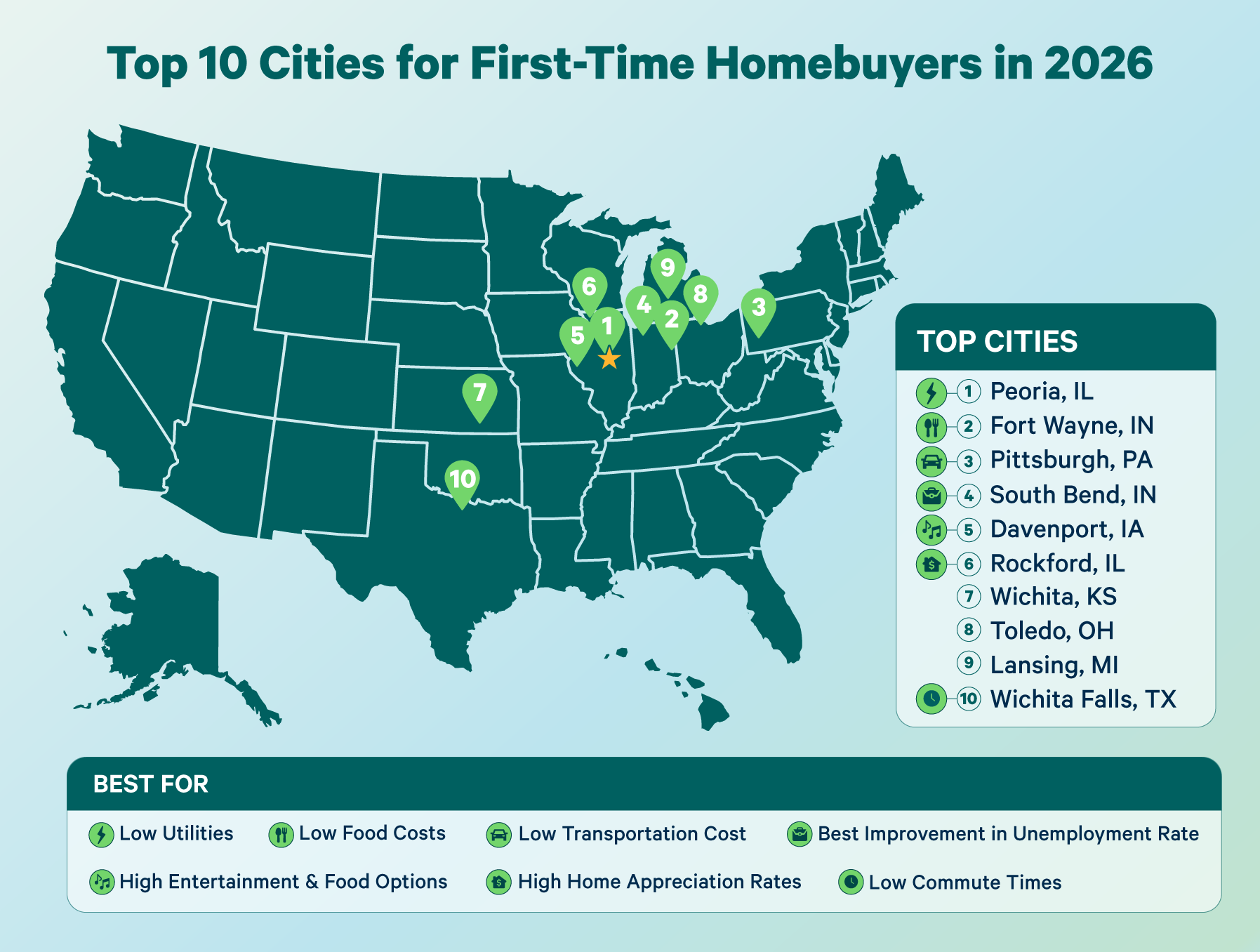
In a new analysis of cities with populations above 115,000, the bank named 10 markets where 2026 newcomers could still make the math work on a starter home, even after years of rate and price shocks.
The ranking focused on places where total monthly housing costs stayed at or below 35% of median household income and where basic quality of life metrics, from crime and commute times to childcare and local entertainment, tilted positive for entry level buyers.
Peoria, Ill. led the list, followed by Fort Wayne, Ind., Pittsburgh, Pa., South Bend, Ind., Davenport, Iowa, Rockford, Ill., Wichita, Kan., Toledo, Ohio, Lansing, Mich. and Wichita Falls, Texas. Together, they formed a largely inland corridor of relatively modest prices and steady job bases, in stark contrast to the cost squeeze in many coastal metros.
“Affordability was an important factor, but it wasn’t the only thing we looked at,” Jake Vehige, president of mortgage lending at Neighbors Bank, said.
“We focused on places where first-time buyers can afford a home and enjoy a strong quality of life that includes entertainment, reasonable commutes and everyday conveniences. This is proof that you don’t have to live in a major coastal metro to live well in 2026.”
He added that these cities “may not be on everyone’s radar, but they give first-time buyers a real chance to build equity and financial stability. For most looking to enter the housing market, that’s more important than chasing the next hot spot.”
Mid-sized markets gain ground as buyers chase value
The Neighbors Bank findings aligns with broader data pointing to a migration of demand into the heartland. Zillow recently reported that Rockford, Ill. ranked as the most popular housing market in the country in 2025, with more than 60% of page views coming from shoppers outside the area and typical homes going under contract in about five days.
“Over the past few years, stretched affordability has defined the housing market, and this year’s list shows just how strongly it’s shaping where Americans choose to shop,” Zillow senior economist Orphe Divounguy said in the company’s report.
Meanwhile, Realtor.com’s latest ranking of the best markets for first-time homebuyers in 2026 points squarely to mid‑sized, relatively affordable cities east of the Mississippi, where prices, incomes and local amenities still lined up for younger buyers.
First-time buyers still squeezed, but adapting
Even where homes remain comparatively affordable, first-time buyers continue to wrestle with elevated rates and post pandemic price gains. MBA chief economist Mike Fratantoni noted that while headline data suggests the typical first-time buyer is about 40, the deeper issue is that “mortgage rates have more than doubled from the low point, and home prices are up more than 50% from pre-pandemic.”
Industry leaders also point to FHA and VA options and adjustable rate mortgages as tools younger borrowers used to get into the market while betting on lower rates in 2026.
Stay updated with the freshest mortgage news. Get exclusive interviews, breaking news, and industry events in your inbox, and always be the first to know by subscribing to our FREE daily newsletter.


