
Renting is cheaper than buying across every major metro, report shows

Renting a home is currently more affordable than owning a home in every large United States metro,according to new LendingTree analysis of Census data.
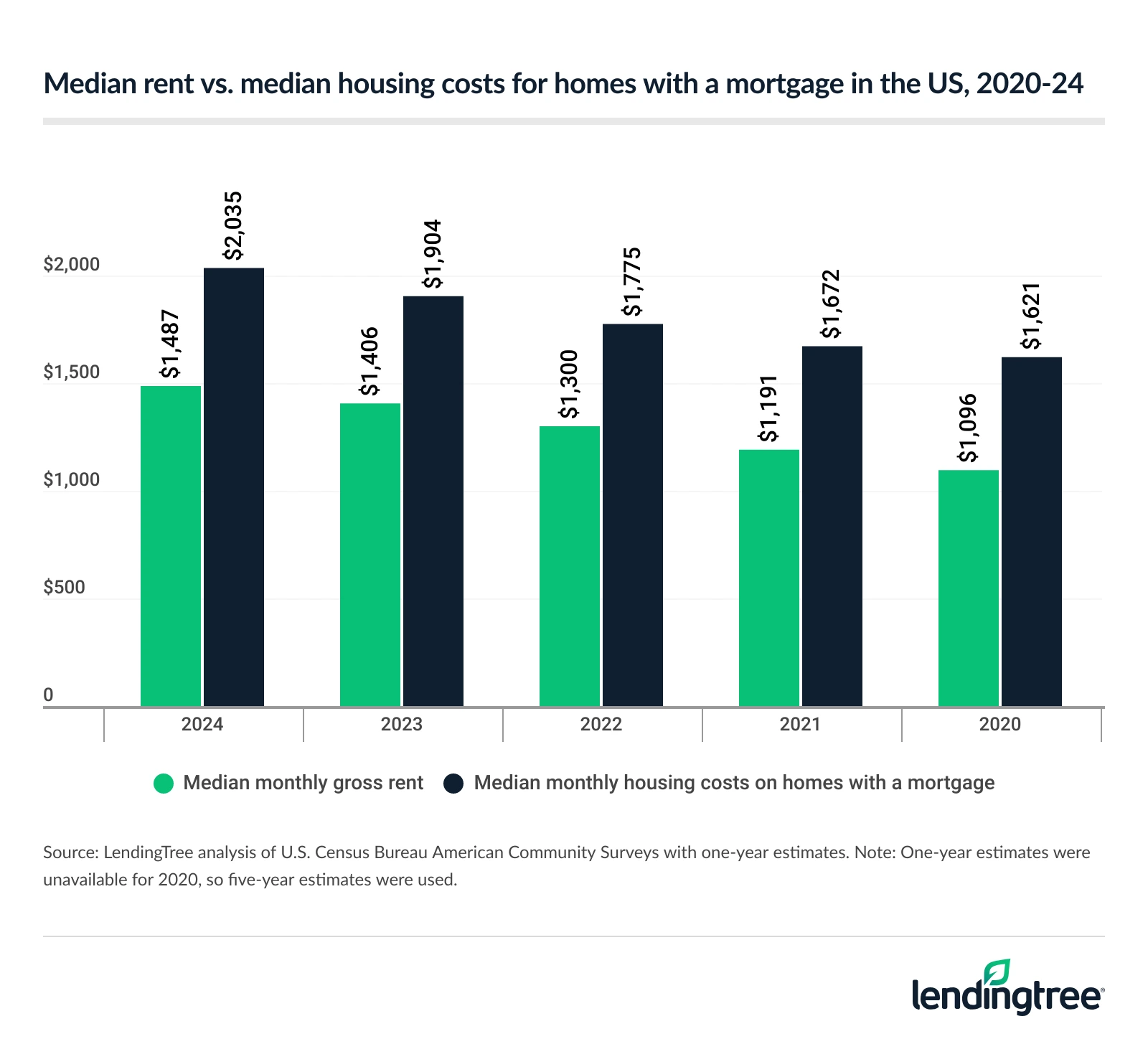
Homeowners with a mortgage paid a median $2,035 a month in 2024, compared with $1,487 for renters. That's a 36.9% premium that translated to $548 more each month, or $6,576 a year.
That gap had also widened. The premium was $50 a month higher than in 2023, and 2024 marked the steepest difference in the past five years.
At the same time, other national measures showed ownership costs had increasingly outpaced rents, with Freddie Mac estimating that, as of September 2024, the mortgage payment on a typical home ran 29% higher than the rent on the same property. The Mortgage Bankers Association’s own payment‑to‑rent ratio likewise showed mortgage payments increased relative to rents into early 2025.
LendingTree chief consumer finance analyst Matt Schulz said the buy‑versus‑rent decision could not be reduced to a simple spreadsheet. “The choice isn’t just about money,” he said.
“Homebuying can represent accomplishment, security, safety and plenty of other things. There’s a reason why homeownership has long been considered part of the American Dream. That said, owning can make financial sense depending on your goals.”
Schulz said homeownership still served as a powerful wealth‑building tool, even after higher prices and rates complicated the numbers.
“The equity you can build in a home you own can provide valuable financing options in the future for things like a home remodel, starting a business or knocking down high-interest debt,” he said.
“To reap all of these benefits, you likely need to stay in the home for more than a few years. But it can pay off if that’s your plan.”
Gaps in high-cost coastal hubs
In San Francisco, median rent came in at $2,435, while mortgaged homeowners faced recorded housing costs above $4,000, producing a monthly difference of roughly $1,565.
Bridgeport, Conn., and New York followed, with gaps of $1,427 and $1,409 respectively. Even in the “closest” markets such as Phoenix, Orlando and Columbia, S.C., renters still paid at least $184 less each month than owners with a mortgage.
On a percentage basis, New York led the way: homeowners with a mortgage there paid 76.1% more a month than renters, ahead of Bridgeport at 75.3% and Providence at 66.5%. Nationwide, the share of households straining under housing costs remained high.
Why many renters choose to stay put
Those numbers force many households to postpone or abandon ownership entirely. “People are waiting longer to buy their first home,” Schulz said.
“Some people are even becoming resigned to the fact that they’ll never be able to own a home. That sort of decision has massive ramifications, not just for individuals but for the economy as a whole.”
RealPage’s latest year‑end review suggests that the US multifamily market in 2026 would be defined less by a glut of new units and more by renters choosing to stay put as owning a home remain out of reach for many.
Similarly, a Clever Offers study revealed that 53% of Americans doubt they’ll ever own their dream home. According to the Knightvest Capital’s latest Multifamily Renter Sentiment Report, a growing number of renters choose to stay put and embrace apartment living as a long-term lifestyle.
On the other hand, nearly half of renters in the US expect to buy a home within the next four years, according to new research from global data and technology company Experian.
Stay updated with the freshest mortgage news. Get exclusive interviews, breaking news, and industry events in your inbox, and always be the first to know by subscribing to our FREE daily newsletter.


