Schieken says brokers who specialize and automate can still be indispensable, even if AI handles 80% of transactions
After a decline in recent years in the number of loan originators, 2025 saw a slight increase. However, many veterans of the industry worry that continued headwinds in the space could cause the number of originators to decrease again.
Industry veteran Bill Dallas told Mortgage Professional America in May that he thought the number of originators could drop to between 20,000 and 25,000.
In addition to market challenges, artificial intelligence gains have, at minimum, streamlined some of the processes that required more time and effort from originators in the past. Some companies are even pushing toward all-AI mortgages in the future, although regulatory hurdles remain solidly in place.
As technology continues to advance, mortgage brokers will have to leverage their relationship advantages to continue building market share, according to one fintech executive.
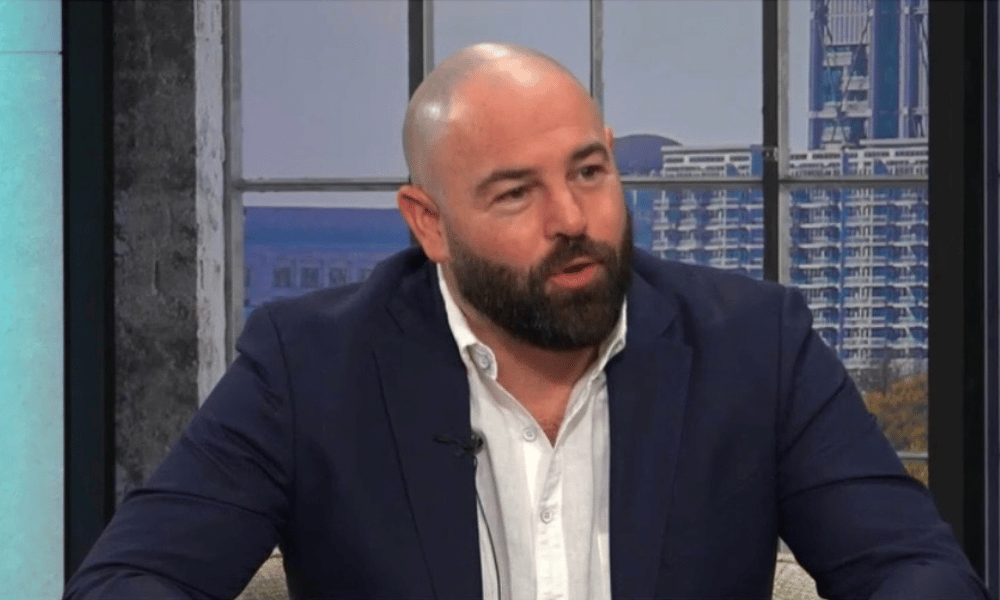
Benjamin Schieken (pictured top), founder and CEO of Fincast, Inc., said industry consolidation is already underway and AI will accelerate it.
"I think we're overstaffed from an origination perspective for the transactions that exist," Schieken told Mortgage Professional America. "There will be a shrinking of the workforce, there will be a massive consolidation. And it's already been happening, not even because of AI but because volume has dried up for a lot of years."
Building a relationship business
For brokers to thrive as the market slows and technology increases, it will be imperative to continue building a relationship business rather than one driven by transaction volume, Schieken said.
"You really got to look yourself in the mirror as a broker and say, am I trying to do volume or am I trying to build relationships?" he said. "There's sort of like this confusion because people sell relationships but want volume. And those things don't really work well together."
The distinction matters because AI will not affect both models equally, Schieken said. High-volume brokers who have already reduced per-borrower contact time to near zero are the most exposed, because their model begins to look more like a transaction platform than a relationship business.
"There are individual brokers doing $500 million in volume a year, where their total time per borrower that they spend intentionally for the system to work is three minutes," he said. "That is a transaction to the broker. And like every company that has scaled up has already deprioritized relationships. They view it as a transaction. They try to churn as many as possible."
He said brokers who are essential are the ones who treat every customer the same and provide the same care to each transaction regardless of how large the loan amount or what type of loan they’re closing.
"You got to help the person that has a $100,000 loan the same way that you do someone who has a $700,000 loan," he said. "Because it's about the person, it's about the relationship, it's about building something that lasts. And unfortunately, a lot of people don't do that. They say they do, but they don't, truthfully."
How to be indispensable
The broker who is indispensable in five years, Schieken said, will have reduced the cost of their operation through automation, increased the range of products they can access, and built genuine expertise in a specific borrower segment.
"Reduce your cost as much as possible," he said. "Automate everything that can be automated, systematize everything that's manual. Reduce the cost of the transaction, reduce the cost of access to capital, and increase the options that you have. Then be able to serve a specific market better than anyone else."
He used a car wash analogy to illustrate where the premium model survives alongside automation. Automated car washes handle the volume, but the person with a Rolls-Royce still wants the hand wash.
"There will always be homeowners, homebuyers and borrowers in the market that are looking for the premium experience," he said. "If you can be the best at the premium experience, you can change their outcome. That doesn't mean that you're going to be the best for every borrower, but figure out who you can be the best for and go be the best for them."
Schieken estimated that 80% of mortgage transactions will eventually be handled largely by AI, and said brokers who set up their businesses correctly can still be among the professionals serving the 20% that require a person.
"Even if 80% of mortgages become fully done by AI, there's still 20% that need help from a professional," he said. "And you can be one of those professionals. Not everyone can be, but you can be one if you set up your business properly."
Stay updated with the freshest mortgage news. Get exclusive interviews, breaking news, and industry events in your inbox, and always be the first to know by subscribing to our FREE daily newsletter.