
March PMI shows weaker demand and sharper price pressures across the private sector

Stagflation concerns intensified in March as UK service sector growth slowed to near-stagnation while input cost inflation accelerated, according to the latest S&P Global UK Services PMI (Purchasing Managers’ Index).
The seasonally adjusted Services PMI Business Activity Index fell to 50.5 in March from 53.9 in February, the weakest reading since April 2025. Readings above 50 indicate month-on-month growth. S&P Global said activity has increased for 11 straight months, but the latest rise was marginal and came in below the earlier “flash” estimate of 51.2.
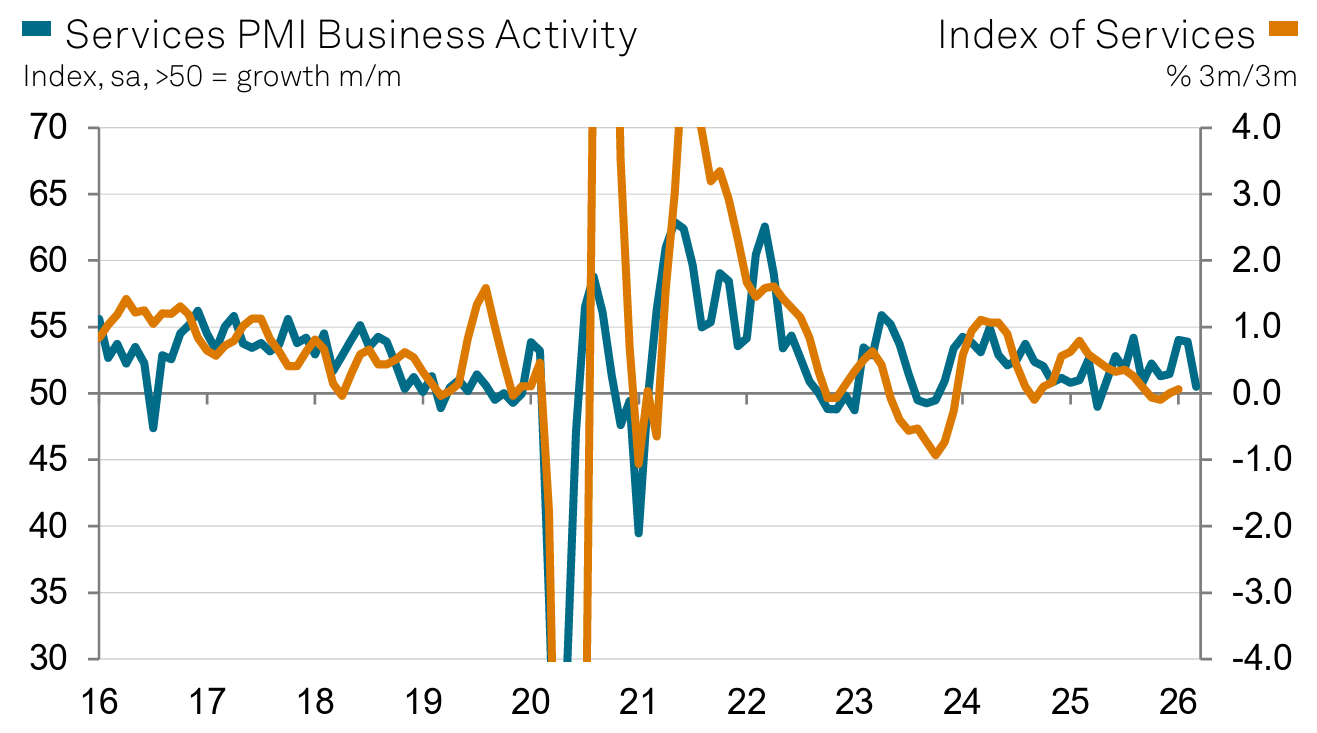 Sources: S&P Global PMI, ONS via S&P Global Market Intelligence
S&P Global linked the slowdown largely to softer business and consumer spending and greater uncertainty tied to the war in the Middle East. The survey also showed a renewed fall in total new work, the first decline in order books since November 2025 and the sharpest contraction for eight months, with companies citing weaker client confidence and delayed investment decisions. New business from overseas fell at the fastest pace since April 2025.
 “UK service providers experienced a marked slowdown in output growth in March as the war in the Middle East encouraged greater risk aversion among clients and postponed investment decisions,” said Tim Moore (pictured right), economics director at S&P Global Market Intelligence. “Cutbacks to business and consumer spending meant that the rate of business activity expansion was the weakest seen since April 2025.
“Stagflation risks appear to have increased, with the final Services PMI data signalling slower growth and higher cost pressures than the earlier ‘flash’ estimates based on data compiled up to 20 March. Overall input cost inflation has accelerated sharply since February and was the strongest for 11 months, which was overwhelmingly linked to rising fuel and transportation bills.
“Many firms also noted that suppliers had sought to pass on higher prices paid for energy, raw materials and shipping. Rising global economic uncertainty due to the war in the Middle East contributed to a further decline in business optimism across the UK service economy. Confidence levels have fallen sharply after hitting a 15-month high in January. Service providers widely commented on fragile domestic economic conditions and concerns about the impact of rising inflation and higher borrowing costs on client demand over the year ahead.”
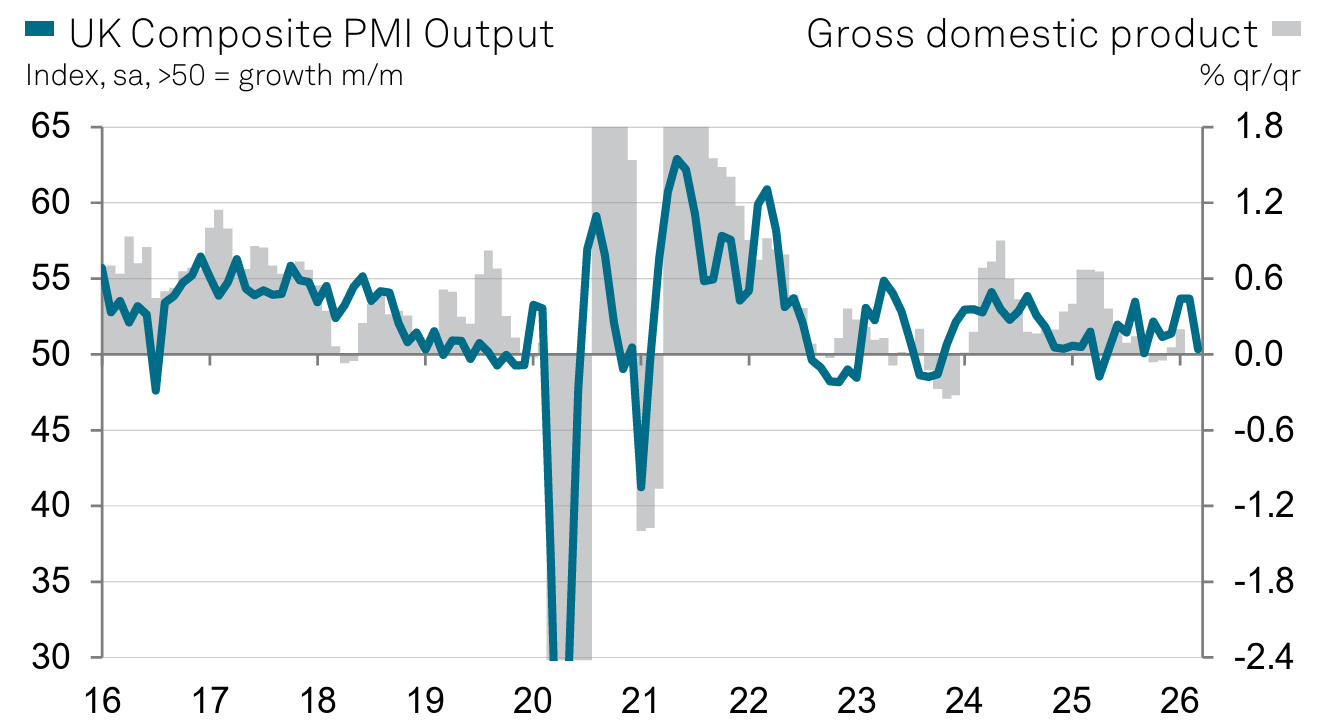 Sources: S&P Global PMI, ONS via S&P Global Market Intelligence
The report said about 40% of surveyed service companies recorded higher input costs in March, while 2% reported a decline, taking input-price inflation to its highest level since April 2025. Firms also reported a stronger rise in prices charged to customers, with the fastest increase for 11 months.
Service sector employment fell again, though the decline eased and was the smallest since October 2025. Respondents cited available capacity and attempts to contain payroll costs.
The wider private sector also lost momentum. The UK Composite PMI Output Index fell to 50.3 in March from 53.7 in February, pointing to only a slight overall expansion. S&P Global said the reading was below the flash estimate, reflecting slower growth in services and a renewed drop in manufacturing output. Input costs across the private sector increased at the steepest pace since February 2023.
Want to be regularly updated with mortgage news and features? Get exclusive interviews, breaking news, and industry events in your inbox – subscribe to our FREE daily newsletter. You can also follow us on Facebook, X (formerly Twitter), and LinkedIn.


