Industry figures warn UK tracker holders face immediate challenges, while the fixed-rate outlook is more nuanced
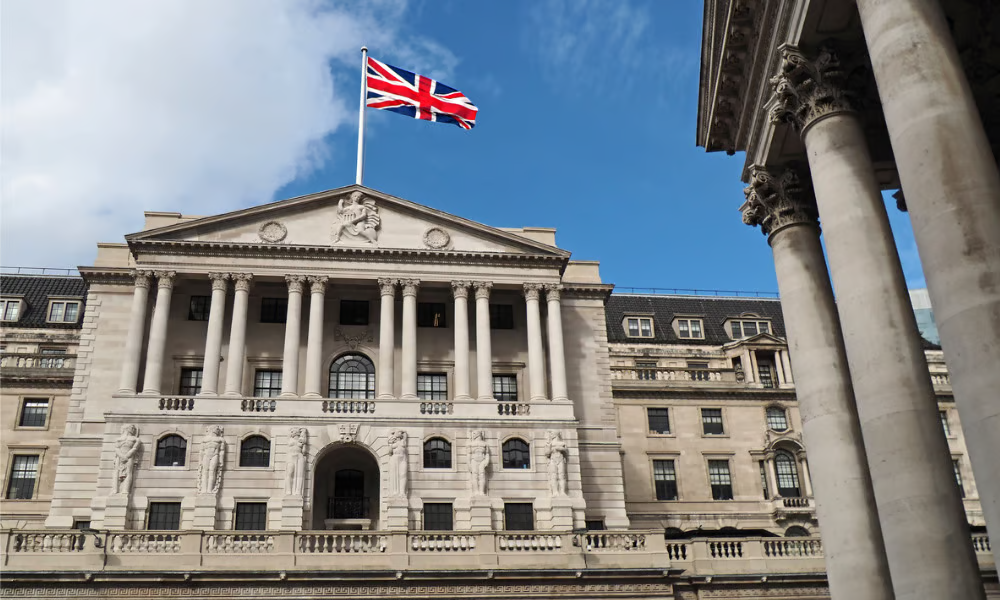
The Bank of England's (BoE) decision to raise Bank Rate by 25 basis points to 4.0% — its first hike in more than three years — has landed at a testing moment for the UK mortgage market. The move was widely anticipated by financial markets and mortgage professionals alike, with two-thirds of brokers surveyed by Mortgage Introducer expecting the hike ahead of the announcement.
With fixed-rate products already approaching 6% and mortgage approvals at a near three-year low, the question is not just what this decision means today, but what comes next.
Tracker borrowers face immediate pressure
For the roughly 1.4 million UK homeowners on tracker and variable-rate mortgages, the impact is both swift and tangible. Adam French, head of consumer finance at Moneyfacts, put the numbers plainly:
"The rise in Base Rate to 4% is unwelcome news for tracker mortgage borrowers across the country, who could see their monthly repayments increase almost immediately. For someone with a £250,000 mortgage over 25 years, a 0.25 percentage point increase adds around £37 a month to their repayments."
Standard variable rate (SVR) borrowers face similar exposure, with lenders widely expected to pass through the full increase within weeks.
Simon Webb, managing director of capital markets and finance at LiveMore, flagged that for older borrowers the pressure can be particularly acute:
"For older borrowers, the impact of higher rates can be particularly acute when refinancing on a retirement income, where there may be less scope to absorb higher payments. Many are balancing mortgage commitments against rising household costs, while others still need to borrow later in life to support their changing circumstances. This makes access to suitable mortgage options and advice increasingly important, particularly if rates remain higher for longer."
Fixed rates: a different story
The outlook for fixed-rate borrowers is considerably more complex — and in some respects more reassuring than the headline figure suggests. French was clear that the fixed-rate market had already moved ahead of the Bank:
"Today's fixed mortgage rates have already priced in market concerns that Base Rate could hit 4.75% within the next 18 months or so. This means borrowers shouldn't expect another significant jump in fixed rates simply because the Bank of England has raised rates today."
Mark Harris, chief executive of mortgage broker SPF Private Clients, echoed that assessment, noting that current fixed-rate pricing already reflects market expectations of approximately four quarter-point increases in base rate:
"Although average mortgage rates are reported to be at a three-year high, with Barclays, Halifax and Nationwide all repricing downwards this week there may be cheaper deals available. Borrowers should speak to a whole-of-market broker and consider locking into a rate sooner rather than later."
The confidence question
Beyond the numbers, industry voices are flagging a less quantifiable but equally significant effect: confidence. Amy Reynolds, head of sales at Richmond estate agency Antony Roberts, was direct:
"Today's rate rise has been largely priced in already. Fixed-rate mortgages have been heading towards 6% for weeks, and mortgage approvals have dropped to their lowest level in almost three years. The real damage is psychological. Another rate rise tells people that borrowing is getting more expensive, not cheaper, and that makes them hesitate. The people hit hardest are those remortgaging and second-steppers trying to stretch to one more bedroom."
Reynolds is expecting a quiet December for the housing market and a slow start to 2027, adding that clients who get deals done will be those who price realistically from day one — a message brokers would do well to pass on.
What comes next?
The door to further hikes remains firmly open. With consumer price index (CPI) inflation at 3.5% in September — its highest level since October 2025 — and ongoing geopolitical uncertainty keeping energy price risks elevated, the Monetary Policy Committee (MPC) may not be finished. The Bank has one more decision scheduled for 2026, on 17 December, with its first 2027 decision to follow on 4 February.
Harris acknowledged the decision was perhaps inevitable, but struck a note of cautious optimism:
"While we would have liked to have seen the Bank of England continue to be brave and hold base rate at 3.75% for another month, it was perhaps inevitable that it would bow to inflationary pressure and vote for an increase. Should the financial markets start to see this as the near-term peak in rates, swap rates should drop and mortgage rates should follow, which will be welcome news for borrowers."
French similarly warned that the longer geopolitical uncertainty persists, the worse the outlook for inflation and energy prices, and the more upward pressure that could place on fixed mortgage rates in the months ahead. His advice to those approaching the end of a fixed deal was to explore options early and secure a competitive rate, while keeping a close eye on the market in case better offers emerge.
Want to be regularly updated with mortgage news and features? Get exclusive interviews, breaking news, and industry events in your inbox – subscribe to our FREE daily newsletter. You can also follow us on Facebook, X (formerly Twitter), and LinkedIn.